Brands don’t win on reach alone anymore. They win when content feels real, moves fast, and shows up everywhere their audience pays attention.
Influencer teams already understand this. They create UGC that people trust. And SEO teams understand it too; they rely on content syndication services to earn visibility, links, and authority.
When you mix both, you get a simple advantage: UGC becomes the fuel for content syndication. It keeps your top-performing creator content alive across third-party platforms, review sites, newsletters, and search-driven placements.
Next, you’ll get a clearer way to use UGC as syndicated content that earns reach, links, and long-term visibility. Let’s begin.
Highlights
- UGC keeps attention longer, which helps it perform better than polished branded content.
- Repurposed creator clips work well across blogs, review hubs, newsletters, and commerce sites.
- Brands syndicate UGC to reach new audiences and strengthen organic traffic.
- Clean rights and simple workflows make redistribution faster.
- Publishers accept UGC more easily because it feels human and honest.
- The SEO upside is real: links, brand mentions, and more visibility across Search Engines.
What is content syndication in marketing?
Content syndication means taking one piece of content and republishing it on other sites. The goal is simple: reach a new target audience without creating everything from scratch.
It started in B2B marketing with whitepapers, eBooks, case studies, and infographics. Today, the format has changed. UGC fits syndication because it’s fast, relatable, and easy for publishers to reuse.
Before we go deeper, let’s break down the basics:
Syndication vs. distribution vs. repurposing
People mix these up all the time, so here’s the simple version:
- Syndication: You publish the same piece on another site.
- Distribution: You promote it, but don’t republish it.
- Repurposing: You reshape the content into a new format.
Modern teams use all three, but syndication is the part that helps you reach fresh audiences with almost no extra production.
It also fits naturally into content distribution strategies that rely on moving content across several channels.
Why syndication has roots in SEO and B2B content
Syndication became popular in SEO because it helps you earn:
- More visibility across search engines.
- Brand mentions on third-party sites.
- Referral traffic.
- A stronger backlink profile.
And here’s the key data point: 79% of marketers already partner with at least one vendor for content syndication. This shows how valuable the channel still is, even as formats evolve.
Many of those content syndication vendors now work with lighter, faster formats, making UGC an easy fit.
How modern formats fit syndicated environments
Publishers don’t want long PDFs anymore. Now, they want content that loads fast and keeps attention.
User-generated content checks all those boxes. Strong formats include:
- Short creator videos
- Quick reviews
- Simple demos
- Lifestyle clips
- Product walk-throughs
These pieces adapt well to blogs, newsletters, review hubs, and any third-party platform that needs fresh content. They also work well across media sites and news outlets that aim to keep readers engaged.
SEO considerations
Syndication only works if search engines understand which page should rank. Without that clarity, your best content competes against itself.
That’s why SEO basics matter here. Keep it simple:
- Ask for a canonical tag, so Google knows your page is the original.
- Use clear attribution to show the source of the content.
- Keep metadata consistent, so search engines don’t misread the page.
These small steps protect your rankings and keep syndicated content from creating duplicate content problems later.
Pro Tip: Strong syndication starts with strong creator material. If you want better raw clips to work with, check our guide on how to create user-generated content that ranks and pulls real search traffic.
What content syndication services typically include
Most teams hear “content syndication services” and picture B2B whitepapers floating around the internet.
The real thing goes further. Providers run structured programs that push content into high-visibility placements across news outlets, review hubs, search engines, and third-party platforms.
Here’s what these services handle:
- Content distribution across partner publishers: They place assets across media sites with built-in audiences, which speeds up visibility. This helps drive steady website traffic without extra production.
- Audience targeting based on industry and intent: These services use demographic, behavioral, or topical filters to get content in front of the right readers. Strong targeting supports better audience insights and more informed decisions.
- Multi-format support: They work with whitepapers, eBooks, webinars, and infographics. Many now accept creator videos, social-proof clips, and product demos because they perform well with consumers and help build early brand recognition.
- Third-party platform placement: Some services push assets into content library websites, aggregator networks, and discovery surfaces like Outbrain. You can also plug certain assets into paid syndication when you need extra reach.
- Performance analytics: They report back on reach, referral traffic, conversion rates, and sources that deserve more investment.
Once you see the structure behind these services, it’s clear why UGC fits.
Creator-led content behaves like any strong content asset. It’s fast to produce, easy to repurpose, and carries credibility that helps with link acceptance and brand visibility across syndicated placements.
How do content syndication services align with influencer marketing?
Syndication and influencer marketing used to live in different worlds. One focused on long-form B2B content, while the other moved fast on social.
But UGC closed that gap. Creators produce content people trust. Syndication gives that content reach outside social.
Together, they create a simple system: you take what already works and place it where more people see it.
Here’s how both sides support each other:
Traditional syndication vs. creator-driven syndication
Old-school syndication relied on PDFs and long explainers. They worked, but they moved slowly and needed heavy production.
Now, creator-driven syndication uses content that’s already proven. UGC is short, visual, easy to load, and simple for publishers to reuse.
There’s a similar pattern in B2B: 70% of marketers using intent data say their digital marketing works well, compared to only 33% of teams that don’t use it.
Intent increases B2B performance the same way UGC increases consumer performance. How? By sending the right content to the right people, which is also the foundation of modern buyer personas.
Why publishers prefer UGC over branded content
Editors like content that feels real. UGC delivers that without forcing a message. It reads fast, holds attention, and doesn’t look like a brand talking to itself.
The numbers back this up. As CreatorIQ reported in 2024, 62% of brands increased their UGC usage year over year. Also, 76% use UGC as their main creator activation.
Publishers pay attention to formats that keep readers engaged. UGC gives them that without extra polish.
How repurposed UGC strengthens SEO performance
Strong UGC helps SEO because it creates natural engagement and brings fresh signals to your pages. Teams use repurposed UGC to improve:
- Click-through
- Time on page
- Brand visibility across search
- Link potential
- Authority for new pages
But that’s not all. UGC also supports your content marketing strategy with assets that adapt well to different industries, platforms, and audiences. This flexibility helps you reach more people and get better engagement across different placements.
Pro Tip: If you want your content to feel even more solid before you syndicate it, check our guide with tips for building trust with content marketing. It’s an easy way to make your pieces feel more reliable from the start.
How brands transform UGC into syndicated content
High-performing UGC shouldn’t die on social. When you reshape it for syndication, it carries its value into blogs, newsletters, review hubs, and third-party platforms.
The process stays simple. You take content that already works and package it for more places to use.
Here’s what that looks like, step by step:
Strong creator clips that hold up outside social
Start with clips that already show traction. Those pieces convert into other formats with little effort:
- TikTok → short article
- Testimonial video → product review
- Carousel → comparison guide
You keep the creator’s voice. What you do here is give the content a format publishers can plug into their pages.
Using UGC to generate editorial links
Publishers link to UGC more often because it doesn’t feel scripted. It shows real usage, real opinions, and real outcomes.
Trust plays a big role here: 79% of consumers say UGC influences their buying decisions more than influencer posts, and 84% say UGC is extremely helpful.
When editors see content grounded in real experiences, they embed it, reference it, and link back to it with less friction.
Creator material that adapts to many formats
Good UGC adapts to multiple formats. Before brands repurpose anything, they look for clips that already explain something clearly or show real use in a way that’s easy to break down.
Those pieces move well because they already tell a simple story that fits different contexts.
Here are the formats that usually work best:
- Evergreen explainers
- Quick product highlights
- Lifestyle narratives
- Short guides
- Seasonal or topical angles
These formats fit many different sites, which makes UGC a strong asset for ongoing content distribution.
Pro Tip:If you need fresh ideas for what kinds of content to repurpose next, here’s a quick rundown of the types of marketing content for businesses. It’s a useful reference when planning your next batch.
Channels where syndicated UGC performs best
UGC doesn’t work everywhere. Actually, it works where people want quick answers, real opinions, and simple explanations. These channels give creator content room to travel without extra production or approvals.
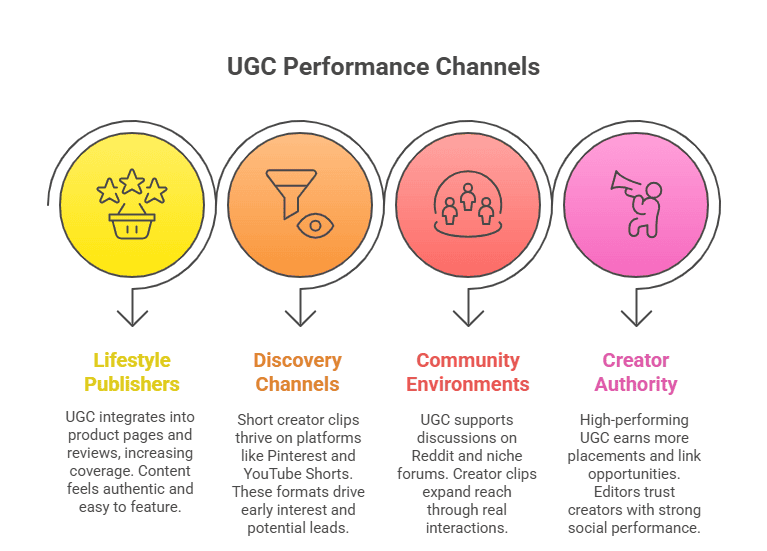
Here’s where syndicated UGC usually performs best:
Screenshot provided by the author
Lifestyle, commerce, and review publishers
These sites want relatable content. They need quick demos, short reviews, and simple product moments they can plug into existing pages. UGC fits that flow better than polished branded assets.
There’s a clear upside here: Brands that syndicate product-focused content see big jumps in coverage. Consumer electronics brands, for example, saw a 324% increase in reviews and a 26% increase in product coverage when they syndicated their content.
That’s the kind of visibility UGC can trigger because it feels real and easy to feature. Some brands even watch these placements closely through performance analytics to see which clips deserve more distribution.
High-intent discovery channels
Places where people browse with intent (Pinterest, Google Web Stories, YouTube Shorts embeds, curated newsletters, and aggregator sites) reward short, visual explanations.
Creator clips slot into these formats without heavy editing, which speeds up placements. These channels also help generate early lead generation opportunities when viewers move from curiosity into action.
Community-driven environments
Reddit, Quora, niche forums, and product communities use quick, no-nonsense content.
A simple creator clip or short answer can support threads, product breakdowns, or category discussions.
Here, UGC builds reach through real interactions, not paid pushes. If a product already resonates with specific target accounts, these communities strengthen that interest even more.
Creator authority and credibility rise
Editors trust creators who have already built credibility on social. When a video or review performs well on TikTok or Instagram, publishers see it as a safe, high-interest asset.
That credibility leads to more placements, more embeds, and more chances to earn links. It also gives you early insight into what formats might perform well if you later run content syndication tools or paid placements.
What are the benefits of content syndication for influencer marketing?
Syndication helps influencer content stay alive long after the social post stops gaining views. It also gives SEO teams cleaner assets, more links, and stronger pages.
Here’s the payoff brands see when they combine both:
- Stronger organic ranking signals: Good UGC improves the basics: click-through, engagement, and content freshness. These signals help SEO pages stay competitive. In fact, brands using UGC see 29% more web conversions than those without it. (Source: WiserReview)
- Higher link acquisition potential: UGC earns more natural placements. When publishers pick up the content, you get clean backlinks, stronger referral channels, and more sites mentioning your brand.
- Extended lifespan for influencer content: A single clip can turn into articles, reviews, short explainers, and roundups. This extends the value of every creator collaboration.
- Lower long-term production costs: UGC gives you reusable assets, and it’s also cheaper to produce. In fact, 85% of marketers say visual UGC costs less than traditional creative or pro-level shoots. (Source: Nosto)
- Faster visibility across multiple audiences: Syndication spreads your content through new publishers, communities, and high-intent channels. You reach people who never saw the original post.
- Better performance signals for future campaigns: Syndicated UGC gives you clearer feedback. When the same clip lands well on several sites, you instantly see which angles and messages deserve another round and which ones don’t.
- More coverage across formats you don’t own: UGC also gets you into places you normally can’t reach. Roundups, listicles, and other earned-media mentions feature creator content faster than polished brand pieces.
- More authority through creator-led narratives: People trust creators more than brands. Syndicating that trust supports broader Ideal Customer Profiles (ICPs) as your reach grows.
How to build an SEO-friendly UGC syndication workflow
A good workflow keeps things simple. You start with UGC that already works, shape it for publishers, and place it on sites that can actually move traffic.
No complex systems or long approvals; just a clean process you can repeat. This kind of setup blends well with strong content marketing operations, since both rely on simple steps that scale without slowing teams down.
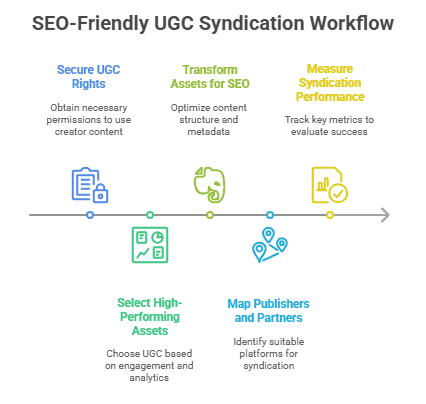
Here’s the setup most teams use:
Screenshot provided by the author
UGC rights and licensing alignment
Start by locking the rights. Make sure you can republish the content on blogs, review hubs, newsletters, and any third-party platform you plan to target.
Teams run into trouble when they skip this step, so get your usage terms clear early.
Asset selection based on creator performance
Pick UGC that already shows strong signals. It’s the easiest way to guarantee solid placements. Look for:
- Videos with strong watch time
- Reviews with real engagement
- Demos that answer clear questions
- Content supported by social media analytics
If it worked once, it usually works again.
SEO-focused transformation of UGC assets
You don’t rewrite the creator. You just make the content easy for publishers to use. Simple edits go a long way:
- Short intro
- Clear structure
- Basic metadata
- Matching search intent
- Clean formatting
This keeps your SEO settings aligned while keeping the creator’s voice intact.
Publisher mapping and partnership selection
Not every site fits your content. Build a tight list based on your category, audience, and product. Strong options include:
- Review sites
- Lifestyle and commerce publishers
- Niche blogs
- Newsletters
- Content library websites
- High-intent discovery channels
Good targeting beats wide distribution.
Measurement based on search, link, and placement metrics
You need a simple way to see if your syndicated UGC is doing its job. The goal is to check if the content brings real visibility and steady traffic outside social.
These numbers keep things clear:
- Links earned
- Referral traffic
- Organic traffic gains
- Domain authority shifts
- Brand mentions
- Placement acceptance rates
These metrics help you decide what to repeat and what to drop.
Best practices for maximizing performance with syndicated UGC
Syndicated UGC wins because it’s simple, real, and easy to place. These best practices help each asset travel further and earn more visibility:
Prioritize high-engagement creator assets
Start with UGC that already pulls reactions. High watch time, saves, shares, and comments tell you what content people actually care about.
Match each UGC format to the right syndication channel
Every channel has its own style. Make the match clean:
- Short demos → review sites
- Lifestyle clips → commerce publishers
- Quick comparisons → newsletters and niche blogs
- Testimonials → product pages or partner sites
A good fit reduces editing and increases acceptance.
Establish canonical clarity for SEO
When publishers republish your content, ask for a canonical tag. It keeps your main page safe from duplicate content issues and helps your search engine optimization stay clean.
Use influencer licensing to amplify reach.
If the creator allowed paid usage, push the content through ads, retargeting, or native placements. Paid amplification helps your syndicated assets collect more referral traffic.
Maintain editorial-level quality
Keep the content authentic, but polish it enough so it reads well everywhere. Simple improvements help:
- Short context intro
- Light cleanup
- Brand-safe wording
- Clear formatting
Publishers say yes faster when the content feels both real and ready.
Common challenges (and how to solve them)
Most teams hit the same problems when they start syndicating UGC. But none of them are hard to fix.
You just need clarity early so things don’t break later:
- Same content on many sites. This happens a lot. Ask publishers to use a simple canonical tag. It keeps your main page clean and avoids SEO issues.
- No clear creator rights. Teams get stuck here because they rush into production. Set rights upfront so you can reuse the content anywhere without slowing down later.
- UGC that feels messy across formats. Raw clips don’t always fit every channel. Add a short intro or a small edit. Keep the creator’s voice, but make the content easy to read.
- Weak placements. Not every site helps you. Build a small list of publishers that match your product and audience. Good placement beats wide placement every time.
- Scattered performance data. UGC spreads fast. So, track the basics: links, referral traffic, organic lifts, and which sites accept your content. Simple numbers tell you what to repeat.
Pro Tip: If your team needs more output and less friction, check our breakdown of content creation services. It shows what actually helps brands produce content that’s ready for syndication.
Recommended UGC agencies for syndication-ready content
These agencies create UGC that works on social and stays strong when you republish it across other sites. Their content is simple, clear, and easy to reuse.
They also understand something most teams miss: UGC needs structure if you want it to travel. Good agencies build content that fits blogs, review hubs, newsletters, and other placements without forcing extra edits. That’s what makes their work reliable for syndication.
Let’s meet them:
1. inBeat
inBeat builds creator content that travels well. They pick strong creators, test quickly, and shape UGC that performs on social media but also adapts cleanly to blogs, review sites, newsletters, and other syndicated placements.
This makes their content easy to reuse across third-party platforms without heavy edits.
Their work with NielsenIQ shows how far UGC can scale when the system behind it is solid. inBeat onboarded more than 100 international creators and produced multilingual content across 19 countries.

That gave NielsenIQ a global library of creator-made assets that could travel across markets, formats, and placements without losing authenticity.
This is a setup that leaves brands with creator content that stays flexible long after the first post goes live.
2. The Influence Agency
Good UGC syndicates easily when the content feels clean and honest. That’s the space where The Influence Agency works well.
This agency leans into simple creator stories; the kind that read fast, feel real, and don’t need a lot of polish. This gives brands clips that slide easily into blogs, newsletters, review hubs, and any channel that needs simple, lightweight content.
They also keep the structure tight. When a piece stands on its own without relying on platform-specific trends, it becomes much easier to reuse across different placements.
Their work with Rona shows how far this can go. The team ran the #EveryonesAnExpert campaign and reached 2.7 million people through creator content built for social. Clips that performed well didn’t stay trapped on the original posts.
In short, they turned into broader awareness assets that supported the brand across multiple channels.
3. The Influencer Marketing Factory
Some UGC hits fast on social but dies there. And The Influencer Marketing Factory makes content that keeps traveling.
This agency’s style leans toward short, clear creator clips that slot easily into articles, product roundups, travel blogs, and email content.
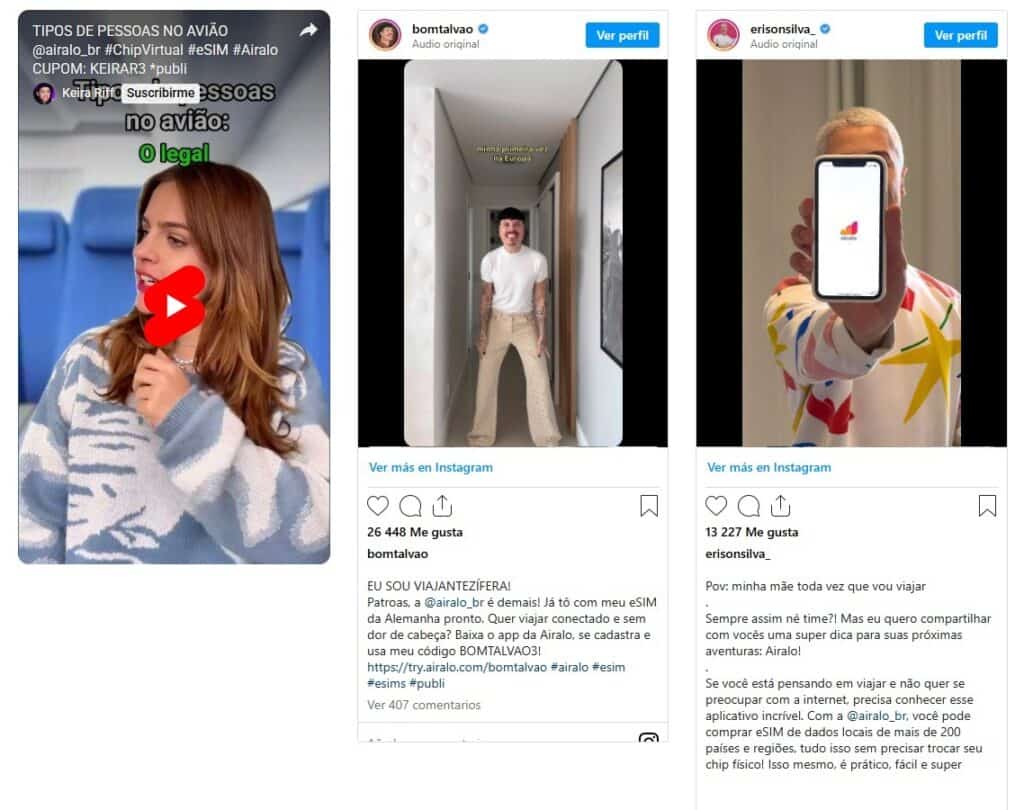
Their Airalo campaign is a good example. The travel videos pulled big views on TikTok and Instagram, then moved into new markets through local publishers and partner features. The content stayed simple, and that made syndication easy.
For brands that want more reach across both social and third-party sites, IMF gives them assets built to move.
Bottom line: UGC makes content syndication actually work
Content syndication services used to feel like a B2B-only play. Now, UGC changes the game. Creator content travels fast, earns trust, and gives brands a real way to show up on sites that ignore polished branded pieces.
As you could see, repurposed UGC helps you reach new audiences, earn links, and stay visible long after a campaign ends. It also gives SEO teams cleaner assets to syndicate across third-party platforms without worrying about duplication or complicated workflows.
If you pick the right creators, build simple systems, and choose placements with intent, your best UGC won’t die on social. Instead, it will become the fuel for bigger reach, stronger authority, and better visibility everywhere your audience reads and searches.
P.S. If you need help with content, our team specializes in content marketing, link building, and outreach. We’d love to chat. Book a call with us today.